
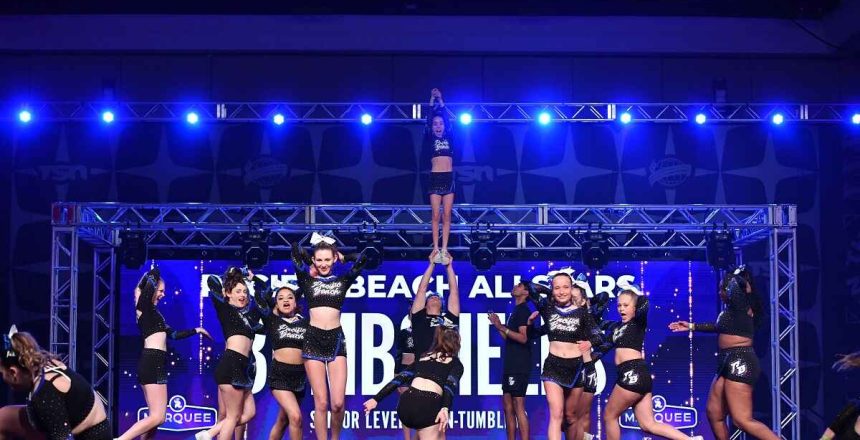
For some children, the first attraction to cheerleading is simple. They see a routine, hear the music, watch the athletes move together, and think, “I want to do that.”
But once they start training, they usually discover that all star cheerleading is about much more than learning routines.
It involves strength, coordination, flexibility, timing, balance, discipline, communication, and plenty of practice. Kids also learn how to work with teammates and how to keep going when a skill doesn’t come together right away.
That combination is what makes all star cheer such an interesting activity for young athletes.
What Makes All Star Cheerleading Different?
All star cheer is generally more focused on athletic training and performance than casual recreational cheer.
Athletes may work on jumps, tumbling, stunts, dance, choreography, conditioning, and full routines. Training is usually structured according to age and skill level, so children can develop gradually rather than being expected to perform advanced skills immediately.
For parents, this progression is important.
A child who is completely new to cheer may need to spend time learning basic body positions and movement patterns. An experienced athlete may already be working on more difficult tumbling or stunt skills.
Both are learning. They’re simply at different points in the process.
How All Star Cheer Helps Build Physical Strength
Cheerleading requires athletes to control their bodies while moving, jumping, balancing, and performing different skills.
Strength training can therefore become an important part of practice.
Depending on the program, athletes may work on their legs, core, shoulders, arms, and overall body control. Stronger muscles can help them perform skills more effectively and maintain better control.
This isn’t about making children lift heavy weights.
For young athletes, appropriate conditioning and skill-based exercises can help build physical strength while keeping training suitable for their age and development.
Tumbling Develops Coordination and Body Awareness
Tumbling is one of the areas many children become particularly excited about.
Cartwheels, handstands, walkovers, and other movements require athletes to understand where their body is in space. They have to coordinate their hands, arms, legs, core, and eyes while controlling movement.
This takes practice.
For children who want additional tumbling practice, tumbling classes San Diego can provide more opportunities to work on these skills outside of regular team training.
The goal isn’t simply to learn a difficult trick. It’s to develop control so the athlete understands how and why the movement works.
Confidence Often Comes From Small Achievements
Confidence doesn’t appear overnight.
A child may feel nervous before trying a new skill. They might watch other athletes doing something and think they aren’t ready.
Then, after several practices, they finally complete it.
That moment can mean a lot.
Maybe it’s a clean cartwheel. Maybe it’s a new jump. Maybe they finally perform a section of the routine without forgetting the choreography.
These small achievements teach children that they are capable of improving.
And that confidence can extend beyond the gym.
Kids Learn How to Handle Frustration
Not every practice goes perfectly.
A skill that worked yesterday may feel difficult today. A child may get tired or become frustrated after repeating the same movement several times.
That’s normal in sports.
All star cheer gives children regular opportunities to experience this kind of challenge in a structured environment.
They learn to listen to their coach, make adjustments, practice again, and try to improve rather than simply giving up.
Honestly, that may be one of the most useful lessons they take from the sport.
Teamwork Is a Major Part of All Star Cheer
Even though individual skills matter, cheerleading is ultimately a team activity.
Athletes need to communicate with each other and understand their roles within a routine. Timing matters. Trust matters. Everyone’s actions can affect another athlete.
That teaches children to think beyond their individual performance.
A great routine isn’t simply about one athlete being the strongest or most flexible. The group has to work together.
For children who are naturally independent, this can be a good opportunity to develop teamwork skills. For children who are shy, it can also provide a structured way to become more comfortable working with others.
Why Communication Matters in Cheerleading
Cheerleading requires athletes to communicate clearly.
They need to listen to coaches, respond to instructions, and communicate with teammates during practice.
In stunt work especially, athletes need to understand timing and movement cues.
Over time, children may become more comfortable speaking up when they don’t understand something or when they need help.
That kind of communication is useful far beyond cheer.
Finding the Right All Star Cheer Gym
Choosing a gym is about more than finding the closest location.
Parents searching for an all star cheer gym should think about their child’s age, experience, goals, personality, and comfort level.
A beginner may need an encouraging environment where learning basic skills is the priority.
An experienced athlete may be looking for more advanced training and competitive opportunities.
Neither is better. The right choice depends on the child.
What Should Parents Look for in a Gym?
When comparing Cheer Gyms in San Diego, parents can ask a few practical questions.
How are athletes grouped by age and skill?
What does a typical practice look like?
How does the gym introduce new skills?
What safety procedures are used?
How involved are coaches during skill development?
What opportunities exist for athletes who want to progress?
These questions can give you a much better idea of whether the program is appropriate than simply looking at photographs or social media posts.
Why Coaching Quality Matters
A good coach does more than demonstrate a skill.
They need to understand progression and recognize when an athlete is ready to move forward.
For younger athletes especially, pushing too quickly can create unnecessary frustration.
A strong coach knows when to challenge an athlete and when to return to the basics.
This is one reason parents should pay attention to how coaches communicate with children during a trial class or visit.
The environment should be encouraging, but it should also take training and safety seriously.
All Star Cheer in San Diego for Different Skill Levels
Children don’t all begin at the same level.
Some may have previous gymnastics or dance experience. Others may be completely new to organized athletic training.
All star cheer in San Diego can be a good option for children who enjoy performance, physical activity, teamwork, and learning new skills.
The important part is finding a program that matches the child’s current ability.
Starting at the appropriate level gives children room to build confidence rather than constantly feeling behind.
How Cheerleading Classes San Diego Can Support Beginners
For families who aren’t ready to commit to a competitive team immediately, cheerleading classes San Diego can be a useful starting point.
Classes can help children become familiar with basic cheer movements, jumps, choreography, and teamwork.
They can also help parents and children determine whether cheer is something the child genuinely enjoys.
That’s worth knowing before making a larger commitment.
If the child loves it, they can explore more structured all star opportunities later.
The Importance of Flexibility
Flexibility can contribute to many cheerleading skills.
Jumps, dance movements, tumbling, and certain body positions can all require a useful range of motion.
Children develop at different rates, though.
One athlete may naturally be more flexible than another. That’s completely normal.
Appropriate stretching and mobility work can help children gradually improve, but flexibility should not be forced. Progress should happen within reasonable limits and under proper instruction.
Discipline Develops Through Regular Practice
Cheerleading is fun, but improvement requires consistency.
A child cannot expect to master a difficult skill after practicing it once or twice.
Regular attendance and focused practice teach children something simple but valuable: improvement usually comes from doing the work repeatedly.
This kind of discipline can transfer into other areas of life.
School assignments, music lessons, sports, and other activities often require the same patience.
All Star Cheer Can Help Children Become More Independent
As athletes progress, they start to understand their own strengths and weaknesses.
They may recognize that their jumps need work or that they need more practice with a particular tumbling skill.
Instead of relying completely on a parent or coach to tell them what to do, they can begin taking more responsibility for their own development.
That’s an important step toward becoming a confident athlete.
Why Some Kids Thrive in a Team Environment
Some children love being part of a group.
They enjoy practicing together, learning routines, encouraging teammates, and working toward a shared goal.
For those children, an all star cheer gym in San Diego can offer a social and athletic environment at the same time.
The friendships can become an important part of the experience, although the primary focus should remain on healthy training and personal development.
What If My Child Is Nervous at First?
That’s completely normal.
A new gym can feel intimidating, especially when a child sees athletes who are already experienced.
Parents shouldn’t compare a beginner to someone who has been training for years.
Give the child time to get comfortable.
A good coach can introduce skills gradually and help the athlete understand that everyone starts somewhere.
Sometimes the child who is nervous during the first class is the same child who doesn’t want to leave after a few months.
All Star Cheer Isn’t Just About Competition
Competitive opportunities can be part of all star cheer, but competition isn’t the only reason children participate.
Some kids love learning skills. Others enjoy performing. Some simply like being active and spending time with teammates.
A child doesn’t need to win every competition for the experience to be valuable.
Progress, effort, confidence, and enjoyment all matter.
How Parents Can Support Their Child
Parents don’t need to become cheer coaches at home.
In fact, trying to teach advanced skills without proper training isn’t a good idea.
A better approach is to encourage consistent attendance, celebrate improvement, listen when your child talks about practice, and avoid putting too much pressure on performance.
If your child is struggling with a skill, remind them that learning takes time.
Sometimes the best support is simply saying, “Keep working at it.”
Finding an All Star Cheer Gym Near You
If you’re searching for all star cheer gyms near me, convenience is worth considering, but don’t let distance be the only deciding factor.
Look at the program itself.
Visit the gym if possible. Ask questions. Watch how coaches interact with athletes. Find out how beginner and advanced athletes are handled.
For families considering a program such as Pacific Beach Allstars, the goal should be finding an environment where the child can train, learn, and enjoy being active.
Conclusion
All star cheerleading can give children a combination of athletic training and personal development that goes well beyond learning a routine.
Through regular practice, kids can develop strength, flexibility, coordination, balance, communication, teamwork, discipline, and confidence.
The biggest changes often come from small moments. A skill that once seemed impossible becomes achievable. A nervous athlete starts speaking up. A child who wanted to quit learns how to keep practicing.
For parents exploring Cheer Gyms in San Diego, all star cheer gym in San Diego, or cheerleading classes San Diego, the most important thing is finding a program that matches the child’s age, experience, goals, and personality.
There is no need to rush the process.
Let children learn at their own pace, celebrate progress, and enjoy the experience. That’s where all star cheer can become more than just a sport.
Frequently Asked Questions
1. Is all star cheerleading suitable for beginners?
Yes. Children can start at different experience levels. A good program should group athletes appropriately and introduce skills progressively rather than expecting beginners to perform advanced movements immediately.
2. Does my child need previous gymnastics experience?
Not necessarily. Previous gymnastics or dance experience can be helpful for some skills, but children can also learn cheerleading from the beginning through appropriate instruction and consistent practice.
3. Can tumbling classes help with all star cheer?
Yes. Tumbling classes San Diego can help children develop body control, coordination, strength, and confidence with tumbling movements that may also be useful in cheerleading.
4. How do I choose the best all star cheer gym for my child?
Consider the child’s age, experience, goals, and personality. Look at coaching quality, safety practices, class structure, skill progression, and the overall environment rather than choosing a gym based only on location.
5. Does my child have to compete if they join an all star cheer program?
That depends on the specific program. Some opportunities are focused on recreational or instructional training, while others are competitive. Ask the gym about its different program options before enrolling.