
Tumbling is one of the most visible parts of cheerleading. When a team hits a row of standing tucks or a clean running pass, the crowd notices. Behind every impressive pass are months, and often years, of careful practice, strength building, and coaching.
Many cheerleaders find that team practice alone does not leave enough time to perfect tumbling. Team time is shared with stunting, jumps, dance, and routine cleaning. That is why so many athletes add dedicated tumbling classes in San Diego to their schedule. This guide explains how tumbling classes work, what skills athletes learn, and how to find the right program.
Why Tumbling Matters in All Star Cheerleading
In all star cheerleading, routines are scored on several elements, and tumbling is a major one. Teams are placed by age and skill level, and athletes with stronger tumbling often have more options when it comes to team placement and routine roles.
Tumbling also supports the rest of a cheerleader’s skill set. The body awareness, core strength, and coordination built through tumbling help with jumps, stunting, and even dance. Athletes who tumble confidently tend to move with more control and power overall.
Just as important, tumbling is a skill that develops in stages. Rushing ahead without a solid foundation is one of the fastest ways to develop bad habits or get hurt. Structured classes help athletes progress at the right pace.
What Are Tumbling Classes?
Tumbling classes teach athletes floor-based acrobatic skills in a coached, structured environment. Unlike a general team practice, a tumbling class puts the spotlight on individual technique. Athletes get repetitions, corrections, and progressions matched to their current level.
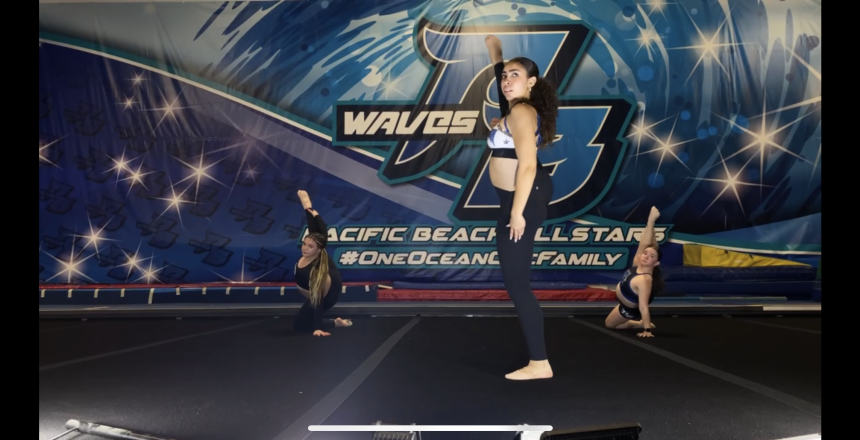
At Pacific Beach Allstar Gyms, tumbling is offered as its own program alongside All Star Rec Cheer, Competitive Cheer, and All Star teams. That kind of setup lets athletes train tumbling separately or combine it with team participation.
Classes are usually grouped by skill level instead of age alone, so a beginner does not have to keep pace with an advanced athlete. This keeps sessions safer and more encouraging.
The Tumbling Skill Progression
Every athlete moves through a natural sequence of skills. Understanding the path helps parents set realistic expectations.
Foundations. Athletes begin with forward rolls, backward rolls, bridges, and handstand holds. These build body control and comfort with being inverted.
Cartwheels and round-offs. The cartwheel teaches straight-line movement and hand placement. The round-off is a key skill because it links directly to most advanced passes.
Walkovers. Front and back walkovers build flexibility, shoulder strength, and balance.
Back handsprings. This is a major milestone. It requires strong technique, core strength, and confidence, and it opens the door to many other skills.
Standing and running passes. Athletes begin to connect skills, such as a round-off back handspring, and eventually work toward tucks and more advanced skills.
Progress is different for every athlete. Some move through a level in weeks, others need months. Coaches usually clear athletes for the next skill only when the current one is consistent and safe.
Key Benefits of Tumbling Classes for Cheerleaders
Faster skill development. Focused repetitions and individual feedback speed up learning compared with limited practice time during team sessions.
Stronger fundamentals. Good technique from the start prevents habits that are hard to correct later, such as bent arms or poor landing posture.
Better strength and flexibility. Tumbling builds the core, shoulders, legs, and back strength that all cheerleaders need.
Greater confidence. Landing a new skill for the first time is a powerful feeling. Confidence gained on the mat carries into performance and everyday life.
Improved safety. Trained coaches use spotting, progressions, and proper equipment so athletes learn skills in a controlled way.
More opportunities. Athletes with strong tumbling can be considered for more advanced teams as they grow in the sport.
How Tumbling Fits Into All Star Cheer
Many families ask whether tumbling classes replace team practice. They do not. They complement it. Team practices focus on the group routine, while tumbling classes focus on the individual.
A typical path might look like this. A younger or newer athlete starts in a recreational program to learn basic cheer and tumbling fundamentals. As skills grow, the athlete moves into a competitive or all star team. Tumbling classes continue alongside, helping the athlete build the passes needed for higher levels.
For athletes who are new to the sport, tumbling classes can also be an easy entry point. They let a child try the gym environment, meet coaches, and build skills before committing to a full competition team.
How to Choose the Right Tumbling Program
Not every gym is the right fit for every athlete. When comparing cheer gyms in San Diego, use these points as a checklist.
Coach experience and training. Ask about coaching backgrounds, safety certifications, and how coaches handle spotting and progressions.
Class structure. Look for classes grouped by skill level with clear goals for each stage.
Equipment and space. Quality mats, sprung floors, and training tools support safe practice and help athletes learn skills with less strain on the body.
Class size. Smaller groups allow for more individual feedback and attention.
Gym culture. Watch how coaches interact with athletes. Encouraging, respectful coaching helps athletes take healthy risks. Pacific Beach Allstar Gyms, established in 2017, states that its mission is to create well-rounded athletes through integrity and skill, and its listed values include strength, faith, family, and love of the sport.
Location and schedule. If you search for all star cheer gyms near me, check whether class times fit around school and other activities. A schedule that feels rushed is difficult to keep up long term.
Clear communication. A good gym is upfront about fees, skill evaluations, and how athletes are moved to the next level.
Pathways. A gym that offers cheerleading classes in San Diego, tumbling, and competitive teams lets an athlete grow without switching gyms.
Tips for Getting the Most Out of Tumbling Classes
Attend consistently. Skills develop through repetition. Regular attendance beats occasional long sessions.
Warm up and stretch. Always prepare the body before tumbling. Focus on shoulders, wrists, hips, and hamstrings.
Build strength outside class. Simple conditioning such as planks, squats, and leg raises supports better technique. Keep exercises age-appropriate.
Listen to coaches. Small corrections often make the biggest difference. Athletes who apply feedback quickly usually progress faster.
Be patient with new skills. Fear is a normal part of learning. Coaches use progressions to help athletes build confidence step by step.
Rest and recover. Sleep, hydration, and balanced meals help the body repair and perform. Athletes should tell coaches if something hurts instead of pushing through pain.
Do not practice advanced skills unsupervised. Tumbling should be done on proper surfaces and with coach approval, especially for skills like back handsprings and beyond.
Frequently Asked Questions
1. Do I need cheer experience to join tumbling classes in San Diego?
No. Tumbling classes are open to athletes at different levels, including beginners. Classes are usually grouped by skill so athletes can start with the basics and progress at their own pace.
2. How often should a cheerleader take tumbling classes?
It depends on the athlete’s goals and schedule. Many cheerleaders attend once or twice a week alongside team practice. Ask the gym coaches for a recommendation based on your current level and goals.
3. How long does it take to learn a back handspring?
There is no fixed timeline. Athletes often need strong fundamentals first, including a solid bridge, handstand, and round-off. Some learn a back handspring in a few months, while others need longer. Safety and consistency matter more than speed.
4. Are tumbling classes different from cheerleading classes?
Yes. Tumbling classes focus on individual acrobatic skills such as rolls, cartwheels, walkovers, and handsprings. Cheerleading classes cover jumps, motions, stunting, and routine work. Many athletes take both.
5. How do I find the best all star cheer gym for tumbling near me?
Search for cheer gyms in San Diego, visit their websites, and compare coaching, class levels, schedules, and locations. Ask about trial classes or gym visits. You can learn more about Pacific Beach Allstar Gyms at www.pacificbeachallstargyms.com or email info@pacificbeachallstars.com.
Conclusion
Strong tumbling makes cheerleaders more confident, more capable, and more competitive. With structured classes, athletes build skills the safe way, one step at a time, and carry that progress into every routine.
Whether your athlete is just learning a cartwheel or working toward advanced passes, the right coaching environment makes all the difference. If you are exploring tumbling classes and all star cheer in San Diego, visit www.pacificbeachallstargyms.com to learn about Tumbling, All Star Rec Cheer, Competitive Cheer, and All Star programs